Bridge Basics for Beginners: 25 Terms Every New Bridge Enthusiast Should Know
A bridge looks like a single object until you learn what to call its parts. Then it comes apart into a story: something carries you across, something pushes the weight into the ground, and something small and unglamorous in between lets the whole structure move a little without cracking.
That is the useful thing about vocabulary. It does not just name things; it tells you where to look. The twenty-five terms below are the ones that come up again and again on site visits, in drawings, and in the captions under old photographs. Stone, steel and concrete crossings all use them, which is why they are worth learning once.
Read them in order for a full tour, or dip in when a word trips you up. Either works.
Start With the Bones: Substructure Terms
The substructure is everything that holds the bridge up and passes its weight to the earth. It costs the most and gets photographed the least.
Abutment. The mass at each end that the bridge lands on. It takes the downward push of the span and the sideways push of the soil behind it, and it is often the reason a bridge ends where it does rather than twenty metres later.
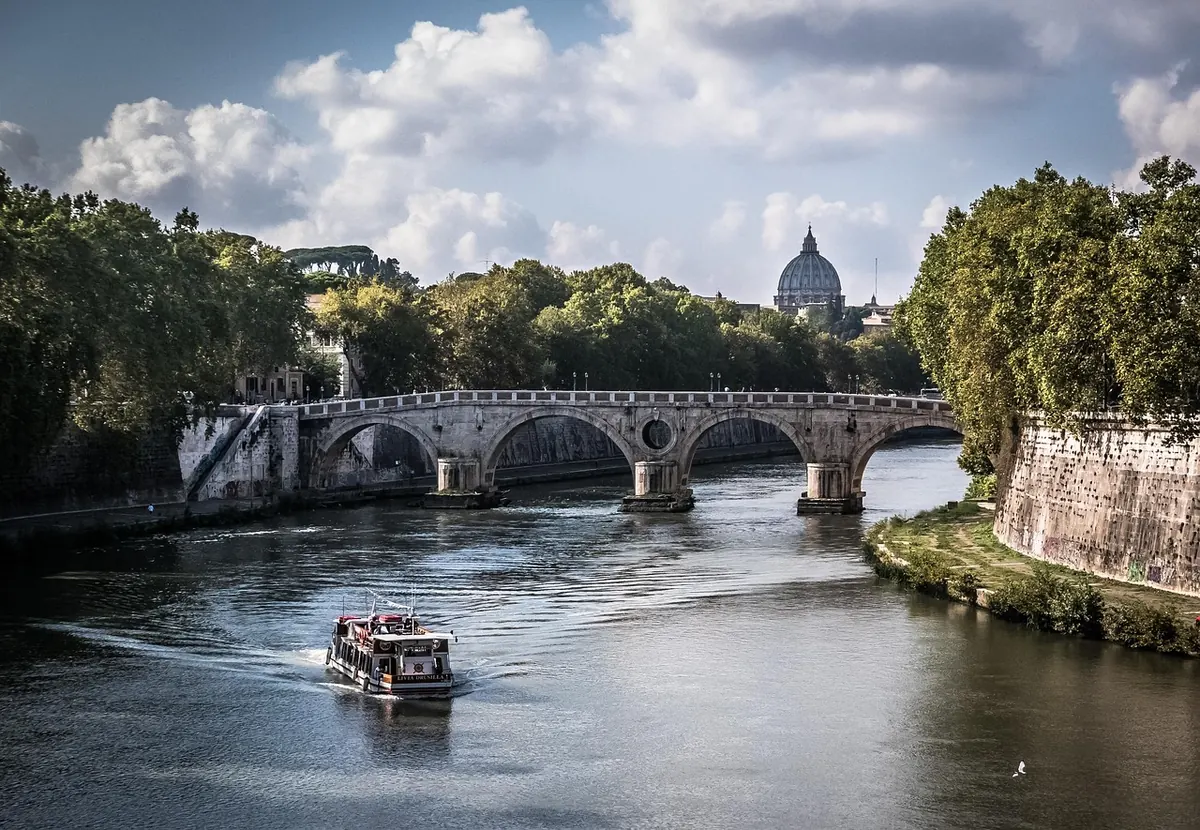
Pier. A vertical support between abutments. Two piers make three spans; that is the whole arithmetic. Piers in rivers carry an extra burden, because moving water likes to scour the bed away from around them. That is why old masonry piers have pointed noses — cutwaters — splitting the current.
Foundation. What the abutment or pier stands on. Piles, caissons, spread footings: different answers to the same question, which is how to reach ground firm enough not to settle. You rarely see it, and when you do it is usually a difficult day for somebody.
Bent. A framed support — a row of columns tied together by a cap — common on viaducts and temporary works. In American usage "bent" and "pier" overlap; in British writing you will hear "pier" more often.
The Parts You Drive On: Deck and Superstructure
The superstructure is everything above the supports: the structure that spans. Its job is to gather the load and deliver it to the bearings.
Deck. The surface and the slab beneath it — what you walk or drive on. Wearing course, waterproofing, drainage and joints all live up here, and they cause more maintenance arguments than any other part of a bridge.
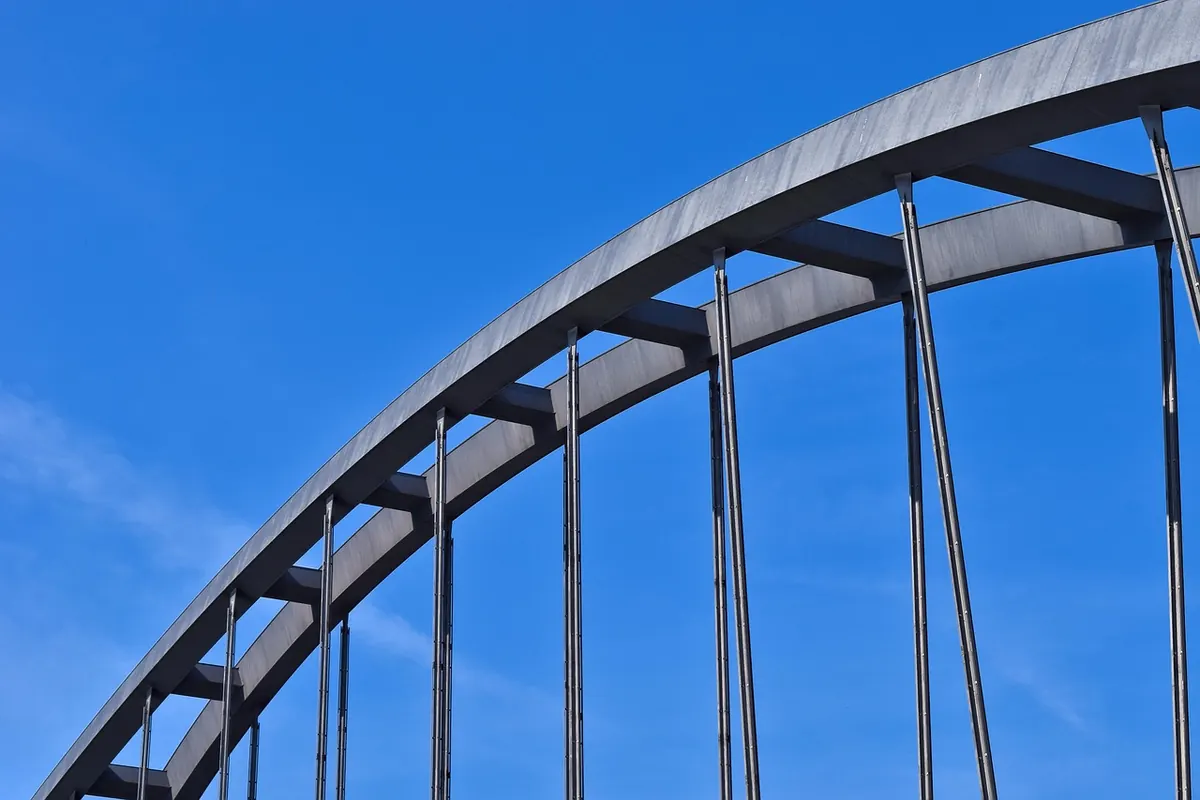
Girder. A main beam running the length of the span. If a bridge shows four or five deep beams from the bank, you are looking at a girder bridge. Stringer is the older word for the smaller beams that sit between or on top of the main ones and carry the deck directly.
Bearing. A small assembly between girder and pier that transfers load and lets the span expand, contract and rotate slightly. Bearings are humble and critical: a seized one can crack a pier.
Expansion joint. The gap that allows movement. Those steel finger plates you hear clunking as you drive over them are doing exactly what they should.
Here is the load path, top to bottom, worth memorising once:
- Traffic or pedestrians load the wearing surface.
- The deck slab spreads that load onto the girders or stringers.
- Girders carry it to the bearings at each end.
- Bearings hand it to the piers and abutments.
- Piers and abutments pass it into the foundations and the ground.
If you can trace that chain on any bridge you meet, you understand more about it than most people who cross it daily.
Arch and Masonry Words Worth Knowing
Arches were built for millennia before anyone wrote down the theory, and the vocabulary is a fossil record of that practice.
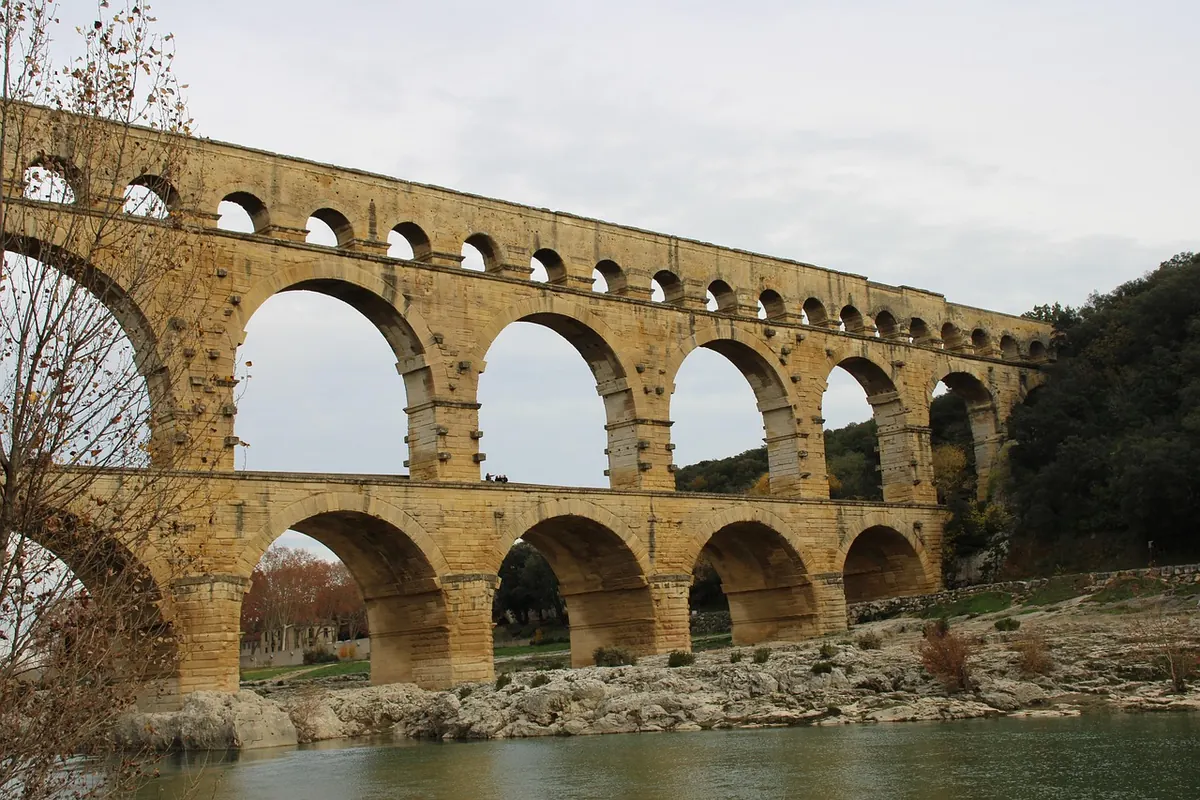
Voussoir. One of the wedge-shaped stones or blocks forming the arch ring. Cut correctly, each voussoir leans on its neighbours and the ring stays up by compression alone.
Keystone. The central voussoir at the crown. Legend says it locks the arch together; in truth the arch is stable before it goes in, but the name stuck because it is the last stone placed and the most satisfying.
Springer. The first voussoir, resting on the abutment or pier where the curve begins. The line from springer to springer is the springing line.
Intrados and extrados. The underside of the arch and the upper curve on its back. The intrados is also called the soffit, and it is the surface you see reflected in the water.
Spandrel. The roughly triangular space between the curve of the arch and the flat deck above. In old bridges it is filled with masonry; in modern ones it is often a thinner wall or nothing at all, which is why new arches look so much lighter than old ones.
Cables, Trusses and the Language of Long Spans
Once a bridge gets long, the words change. The structure stops being a stack of pieces and becomes a network of forces.
Span. The distance between two supports. Depth of girder, size of cable and cost all follow from it. A thirty-metre span and a three-hundred-metre span are not the same problem at a different size; they are different problems.
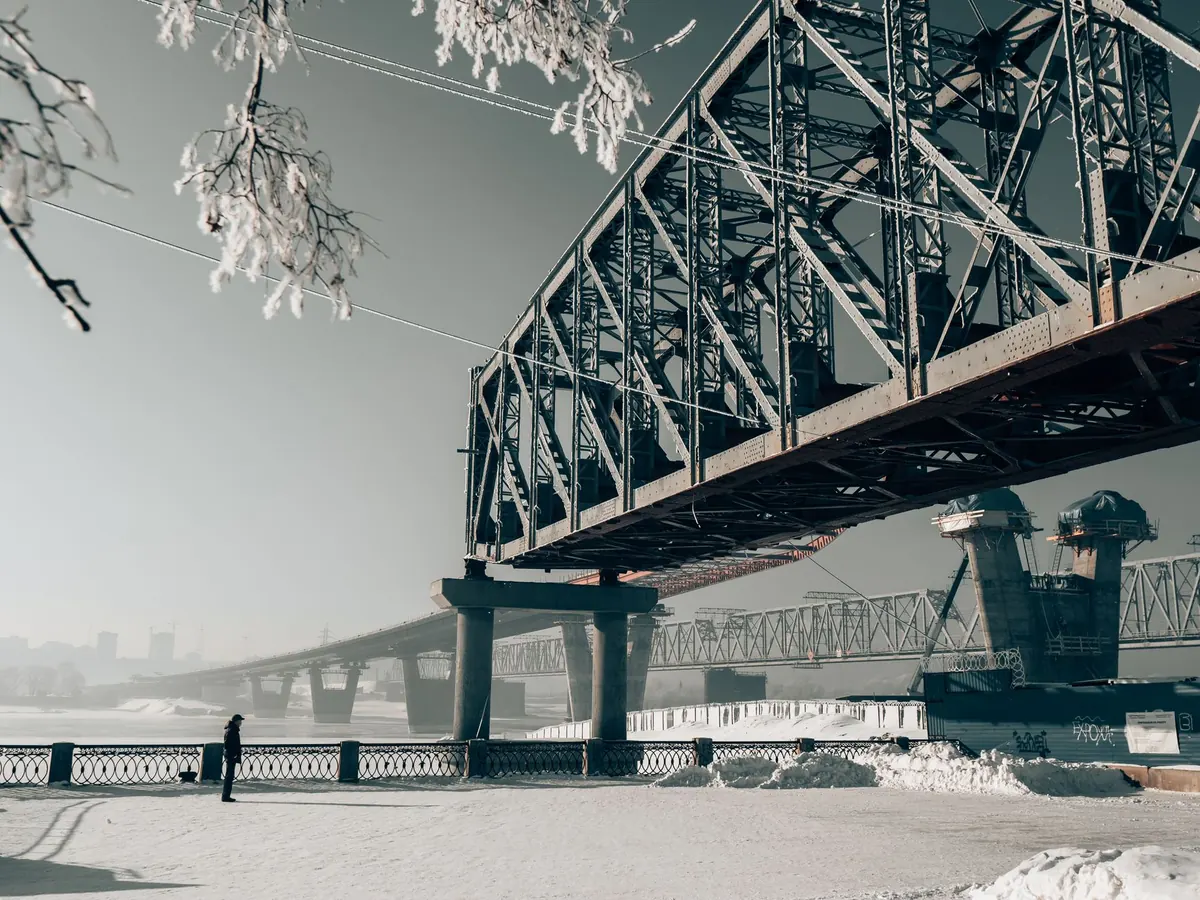
Truss. A framework of straight members arranged in triangles. Triangles do not distort under load the way rectangles do, and that is the entire trick.
Chord. The top or bottom member running the length of a truss. A gusset plate is the flat plate tying several members together at a joint — look for them as dark riveted shapes at the corners of old railway trusses.
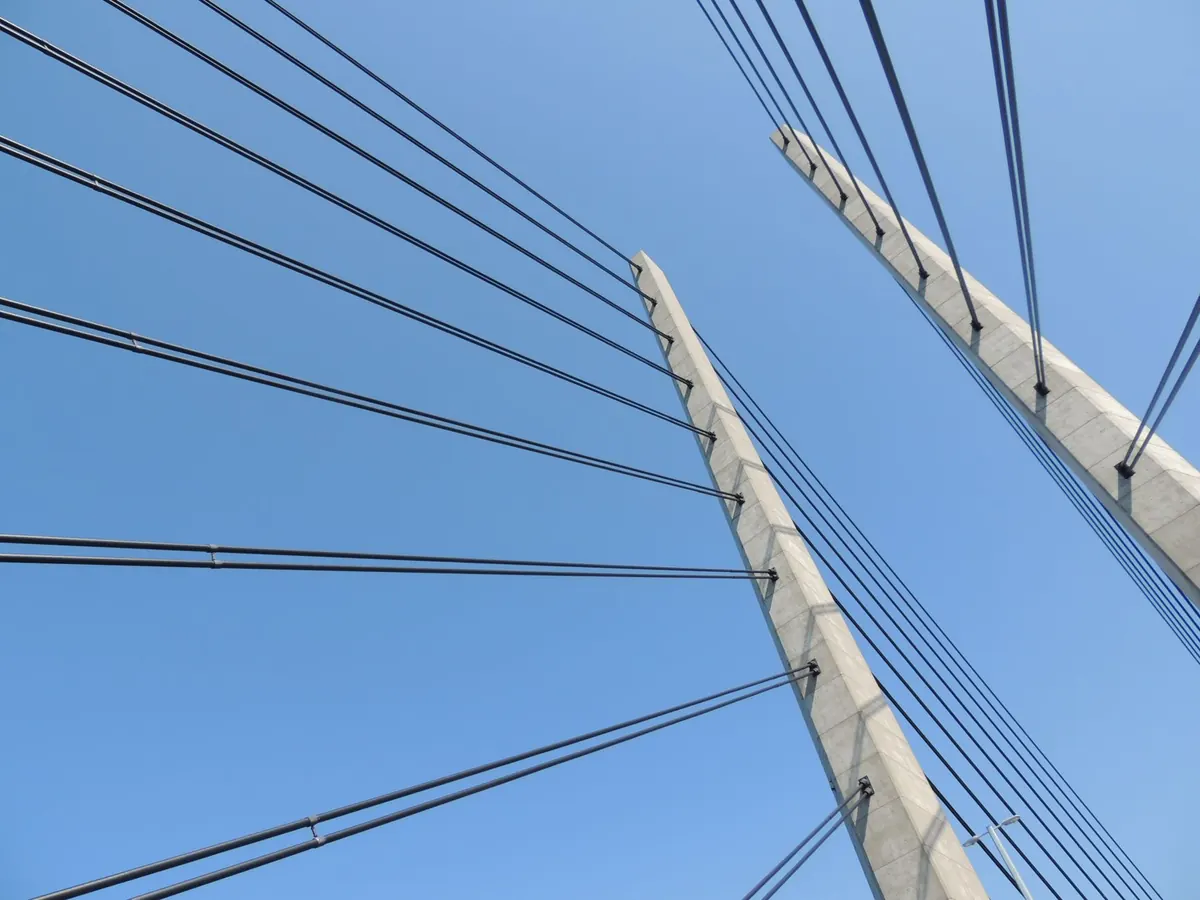
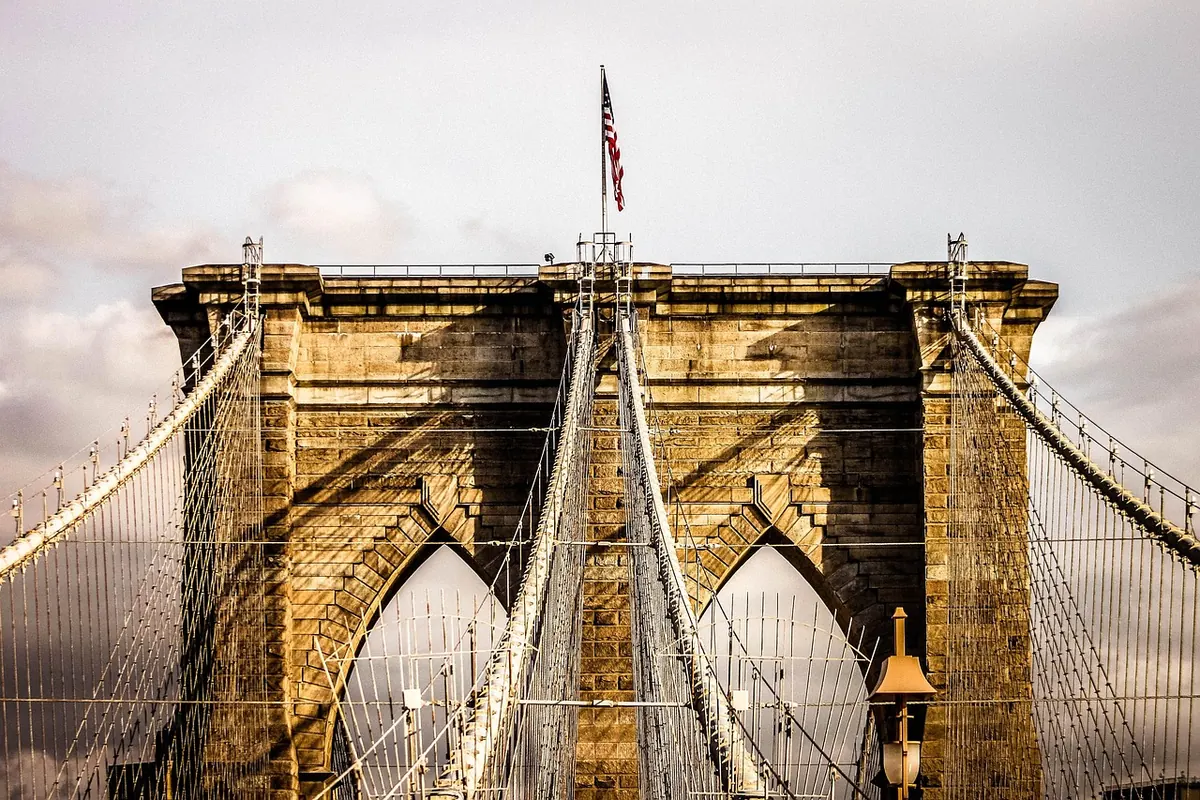
Pylon or tower. The vertical mast of a cable-stayed or suspension bridge. The main cable is the big curve slung between towers, and hangers drop from it to hold the deck. The anchorage is the block of concrete or rock at each end that resists the cable's pull — the part beginners forget, and the part that often decides whether the bridge is possible at all.
Two Forces and Two Loads That Explain Almost Everything
Tension is pulling apart; compression is squashing together. Almost every structural decision on a bridge comes down to which of the two a member will feel, then choosing a shape that suits it. Rope and cable work in tension, stone and plain concrete are happiest in compression, and steel is comfortable either way. That single fact explains why a masonry arch is thick and a suspension bridge is thin.
Dead load is the bridge's own weight: deck, girders, surfacing, railings. Live load is everything temporary — vehicles, pedestrians, wind, snow, the crowd that gathers for a fireworks display. Engineers design for dead load with confidence and for live load with a long list of assumptions, because traffic changes and weather does not read drawings.
How to Use These Words on Your Next Walk
You do not need a site visit to practise. Pick a bridge you cross regularly and try this on the way over:
- Find the abutments, then count the piers from the bank.
- Trace the load path from your feet down to the ground.
- Locate one joint or bearing and work out what it is allowing to move.
- Decide whether the main members are in tension or compression
Photo: 652234 / Pixabay